

TWIPLA as an Alternative to Chartbeat
Comparing Website Intelligence with Editorial Analytics
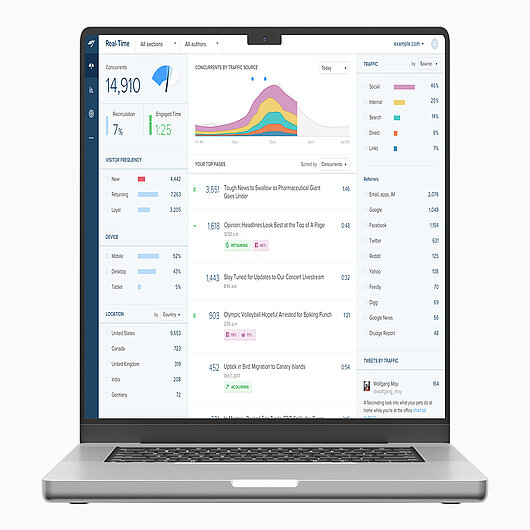
If you’re searching for an alternative to Chartbeat, you’ve probably realized that modern publishers, platforms, and website operators now need analytics that answer far more than editorial questions alone.
For years, Chartbeat has been established as a leading editorial analytics platform, helping publishers understand what content was gaining attention and how readers engaged with it.
TWIPLA now enters that same editorial intelligence space while broadening the focus beyond newsroom analytics alone. Alongside real-time content monitoring, it helps organizations connect editorial performance with audience retention, subscription activity, engagement patterns, and commercial performance across the wider website experience.
We're also evolving toward trend intelligence and content opportunity discovery, which will teams spot rising topics earlier through internal performance signals, broader ecosystem patterns, and external demand trends.
This creates a broader intelligence layer that helps organizations understand not only what content is performing, but also:
- Why it performs
- How visitors interact with it
- What opportunities are emerging next
- What drives measurable business impact
Rather than stopping at retrospective reporting, TWIPLA is evolving toward a system that helps publishers identify demand earlier, uncover data-backed content opportunities, and connect insights directly with editorial workflows and publishing environments.
This guide compares Chartbeat and TWIPLA to show where their capabilities now overlap, where TWIPLA extends further, and what that means for teams making editorial, commercial, and platform-level decisions.
→ Subscribe to the Newsletter
Stay up to date with TWIPLA. Get product updates, practical insights, and industry news delivered to your inbox.
TWIPLA vs Chartbeat: Different Analytics for Different Decisions
Chartbeat is an editorial analytics platform designed to support newsroom decision-making.
It helps editorial teams understand how content performs in real time through attention and engagement signals. With these insights, teams can make better decisions about what to publish, promote, or update.
TWIPLA now enters that same editorial intelligence space as an alternative to Chartbeat, while building on it substantially.
It expands editorial analytics into a broader operational view that supports editorial, UX, SEO, subscription, and conversion optimization. This broader approach helps teams:
- Identify emerging content trends across internal performance signals, the broader TWIPLA network, and external trend sources like Google Trends
- Generate data-backed content opportunities that integrate directly into editorial workflows and CMS environments
- Analyze content performance at a deeper level through metadata and behavior signals
- Monitor page-level performance through dedicated workspaces
- Embed analytics directly into workflows where teams make decisions
Put another way:
Both platforms help businesses understand which content deserves attention in real time.
TWIPLA just extends that visibility further by showing how visitors interact with pages and where engagement breaks down. It also reveals what impacts navigation choices and what drives measurable conversion outcomes. It also helps teams identify editorial opportunities gaining momentum before competitors react.
This shift, from isolated editorial signals to connected intelligence, defines the key differences this comparison explores further below.
Chartbeat’s Strengths and Limitations
Chartbeat’s strengths are closely tied to its editorial focus.
It excels in environments where real-time content performance, attention metrics, and newsroom workflows drive decision-making.
However, that focus introduces limitations when teams need analytics that extend beyond content performance alone.
This is where TWIPLA expands the picture.
Alongside real-time editorial insights, TWIPLA connects content performance with visitor behavior, engagement breakdowns, conversion activity, and measurable business outcomes.
TWIPLA is also evolving toward more proactive editorial intelligence.
Rather than only reporting on content that is already performing well, it helps teams identify rising demand patterns before topics fully peak in visibility.
By analyzing traffic patterns, broader trends, and external signals, TWIPLA can surface emerging opportunities and translate them into actionable content ideas that integrate directly into editorial workflows.
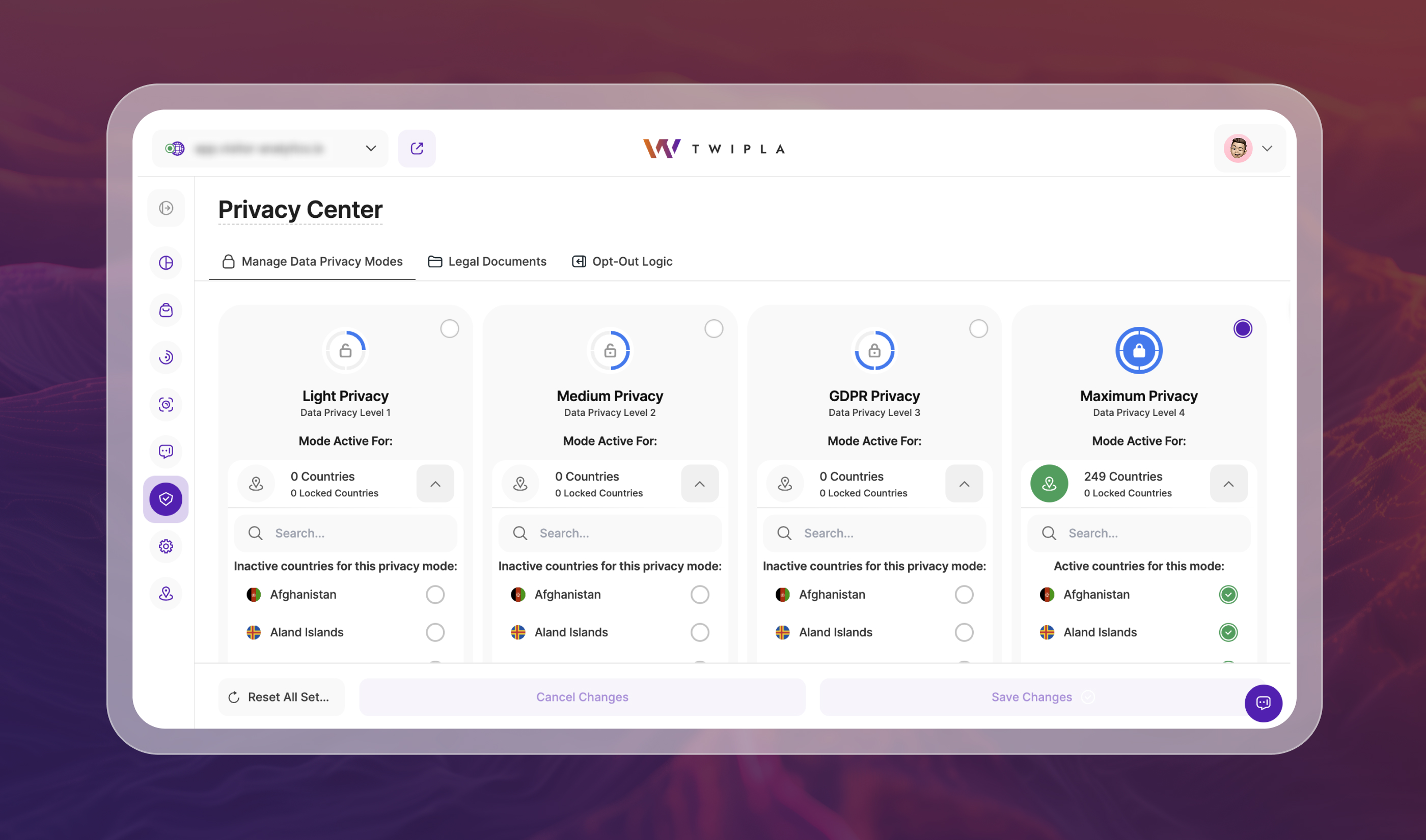
Table: Chartbeat vs TWIPLA at a Glance
| Chartbeat | TWIPLA | Your edge with TWIPLA | |
| Core focus | Built for editorial teams and newsrooms. | Website intelligence platform spanning editorial, behavioral, and conversion analytics. | Unify content performance reader engagement and commercial impact. |
| Primary decision context | Helps editors decide what to publish or promote. | Helps teams understand what content deserves attention, how visitors engage with it, and what drives outcomes. | Move from content decisions to measurable business impact. |
| Real-time insights | Strong real-time dashboards for content monitoring. | Real-time content performance, visitor activity, engagement signals, and page-level analytics. | Act on live performance across content, audience activity, and business goals. |
| Trend detection & opportunities | Identifies trending content based on engagement signals. | Detects emerging trends across site activity, the broader TWIPLA network, and external sources, then surfaces data-backed content opportunities. | Discover emerging editorial opportunities earlier and connect them directly to publishing workflows. |
| Content analytics depth | Focused on engagement and attention metrics. | Content analysis enriched with interaction signals, metadata, and visitor interaction data. | Understand not just what performs, but why. |
| Page-level performance workspace | Content performance viewed through dashboards. | Dedicated page-level environments combining engagement, navigation, and revenue signals. | Manage and optimize each page as its own performance unit. |
| Analytics context | Accessed through dedicated dashboards for content monitoring. | Analytics available in dashboards and embedded within pages and workflows. | Access insights where activity happens, not only in separate reporting views. |
| Tracking dependency | Relies on cookies and consent-based tracking models. | Cookieless tracking with flexible privacy modes. | Maintain full traffic visibility even when tracking is restricted. |
| Behavioral depth | Aggregated engagement metrics. | Session recordings, heatmaps, funnels, and event tracking. | Diagnose the interaction patterns driving performance. |
| Commercial flexibility | Publisher-style contracts. | Subscription-based, scalable pricing. | Align analytics with platform or business growth. |
TWIPLA vs Chartbeat: Behavioral Analytics and Data Coverage
Chartbeat’s analytics centers on understanding how content performs at an editorial level.
TWIPLA complements editorial analytics with session-level visibility.
This means teams do not only measure performance at the content level. They can also validate performance through real visitor interactions.
Teams can investigate why visitors abandon pages, where subscription interest weakens, which interface elements create friction, and how engagement patterns influence downstream conversion rates. It also identifies emerging content opportunities and turns them into optimized articles directly within connected CMS workflows.
Such capabilities mean that TWIPLA digs into aggregated engagement signals, exposing the real interactions behind performance and enabling deeper diagnosis and more confident optimization.
That level of insight becomes especially important when privacy restrictions and consent requirements begin limiting what analytics platforms can capture.
For publishers, some of the most commercially valuable reader interactions can disappear entirely when visitors reject tracking.
A returning reader may perform a large number of valuable actions, yet large parts of that experience remain invisible or fragmented in consent-dependent analytics environments.
TWIPLA’s cookieless and consentless tracking model preserves visibility across those journeys, helping teams understand which content, authors, categories, sections, and visitor behaviors contribute most directly to website success.
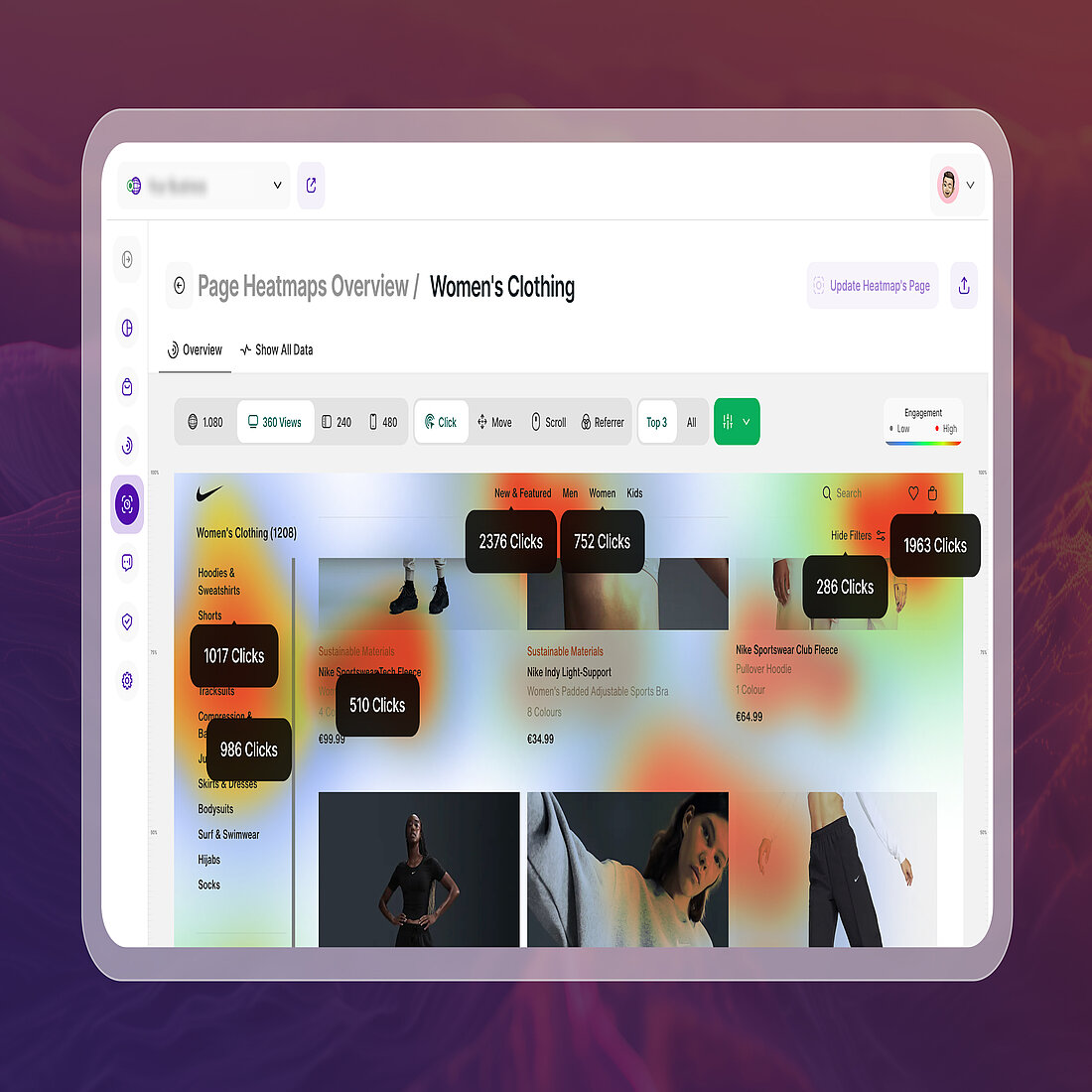
Table: What TWIPLA Adds Beyond Editorial Metrics
| Chartbeat | TWIPLA | Your edge with TWIPLA | |
| Event tracking | Tracks editorial engagement signals. | Tracks behavioral, custom, and frustration events. | Capture meaningful actions across the full visitor experience. → Explore Event Tracking |
| Session recordings | Not available. | Full session playback with advanced filtering. | See real visitor behavior behind the data. → Explore Session Recordings |
| Conversion funnels | Limited conversion tracking. | Multi-step funnels with session-level context. | Connect drop-offs directly to behavior. → Explore Conversion Funnels |
| Heatmaps | Aggregated scroll and engagement overlays. | Click, scroll, and movement heatmaps based on real visitor interactions, without impacting page speed or SEO performance. | See how visitors actually interact with each page, without sacrificing performance or search visibility. → Explore Heatmaps |
| Frustration signals | Not available. | Detects rage clicks, dead clicks, and more. | Identify hidden UX issues early. → Explore Alarming Behavior Events |
| Behavioral segmentation | Content-focused segments. | Advanced segmentation across behavior and traffic channels. | Build actionable insights tied to outcomes. |
| Linking behavior to outcomes | Aggregated reporting. | Direct link between behavior, funnels, and conversions. | Turn insights into measurable improvements. |
| Data coverage under privacy restrictions | Impacted by blockers, consent logic, and reduced tracking modes. | Cookieless and consentless tracking across privacy modes. | Track full reader activity and conversions, even when visitors don’t accept a cookie banner. |
Platform Distribution and Commercial Fit
TWIPLA is built for distribution at scale.
It can be deployed once and made available across many customer websites as a native or white-label capability.
This becomes even more powerful as analytics moves closer to workflows.
Leaving behind separate siloed tools, insights are surfaced where decisions are made, whether at page level, within workflows, or across environments.
For CMS platforms, website builders, hosting providers, and other complementary platforms, this creates a fundamentally different model: analytics becomes part of the product, not an external tool.
TWIPLA vs Chartbeat: Pricing Philosophy and Commercial Flexibility
With Chartbeat, costs typically align with newsroom size and traffic volume. Pricing often starts in the hundreds of dollars per month for smaller publishers. For larger organizations, costs can scale into the thousands or even five-figure monthly contracts.
For example, small to mid-sized publishers commonly pay between $500 and $3,000 per month. On the other hand, large newsrooms and enterprise deployments can exceed $10,000 per month depending on scale and requirements.
This structure reflects its focus on editorial teams. But it can limit flexibility for businesses that need analytics to scale more gradually or across multiple sites.
TWIPLA follows a subscription-based pricing model.
Actual traffic volume determines pricing instead of fixed tiers or contracts, allowing analytics to scale alongside page visits and usage.
This creates a significantly lower entry point and a more flexible cost structure, particularly for organizations managing multiple domains or looking to embed analytics into broader products or services.
In practice, this often results in substantially lower overall costs compared to traditional editorial analytics platforms, while providing broader editorial, behavioral, and conversion intelligence in a single system.
This approach supports:
- Flexible packaging within platform plans
- Scalable resale and bundling strategies
- Predictable margin expansion as usage increases
The Core Difference Summarized
Chartbeat is designed primarily to help editorial teams optimize publishing decisions in real time.
TWIPLA approaches analytics from a broader organizational perspective. It connects editorial performance with audience activity, subscription engagement, UX visibility, and commercial outcomes across the wider digital experience.
For publishers, platforms, and website operators evaluating long-term strategy, the difference is not simply editorial analytics versus website analytics. It is the difference between understanding what content performs and understanding how that performance contributes to wider business goals.
Sign up to TWIPLA for free or book a demo to see how editorial intelligence, audience insights, and commercial visibility come together in one system.
